Campfire AI Engine: Automating Salesforce Configuration and Requirements Analysis
By Ty Alibhai, Head of Product at Campfire
The Campfire AI Engine is a custom-built solution by VFP that streamlines the development lifecycle by automating manual configuration tasks. Powered by the Claude AI platform, this engine interprets business requirements and directly builds the corresponding configuration components within a target sandbox environment.
Automated Configuration and Deployment
The engine is designed to eliminate the friction of manual setup by translating solution design summaries into functional metadata.
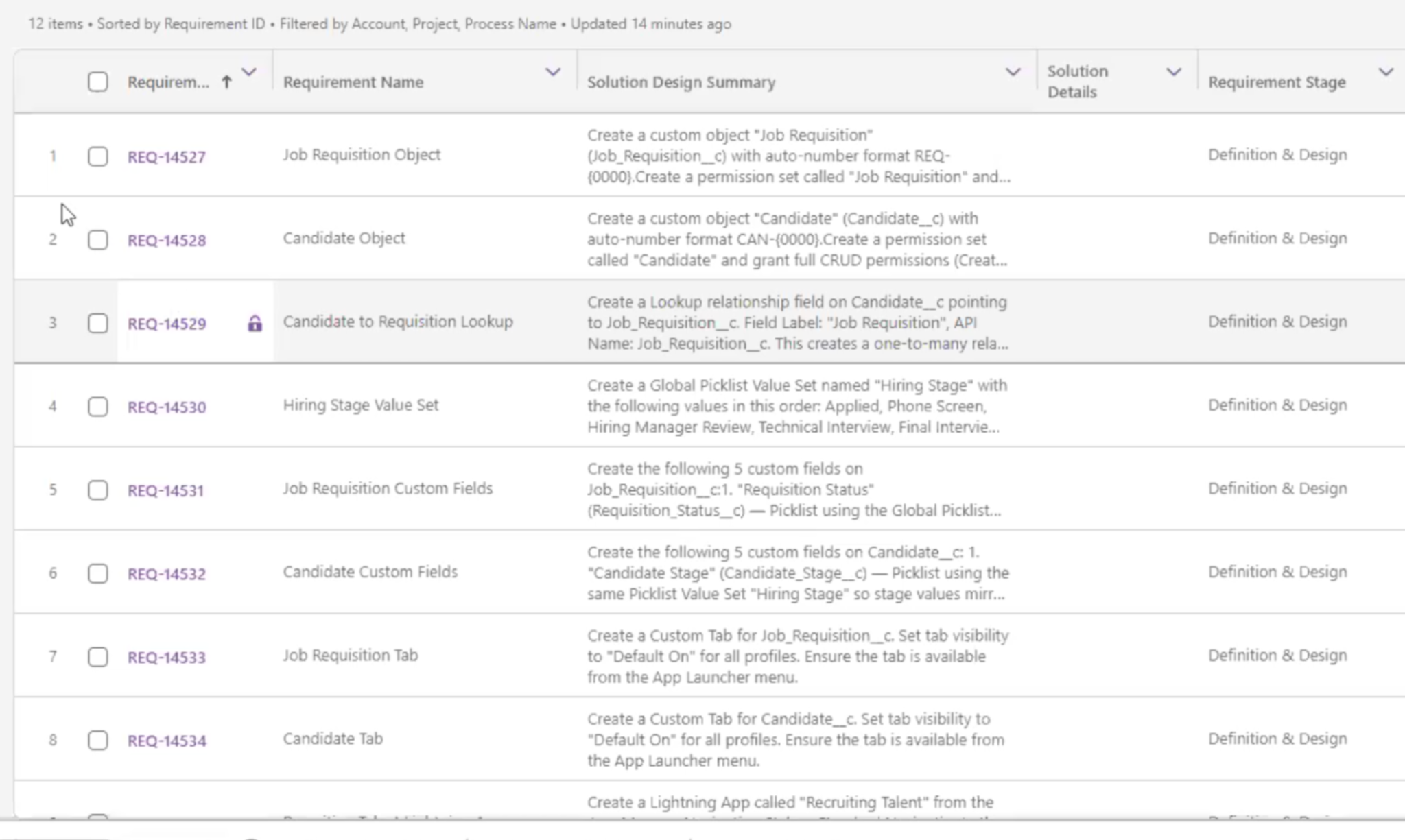
Requirements Translation: The tool reads system requirements from a source production org and analyzes them to interpret the intended solution.
Direct Org Connection: It connects to a target org (such as a customer sandbox) to build configuration components that are typically created manually.
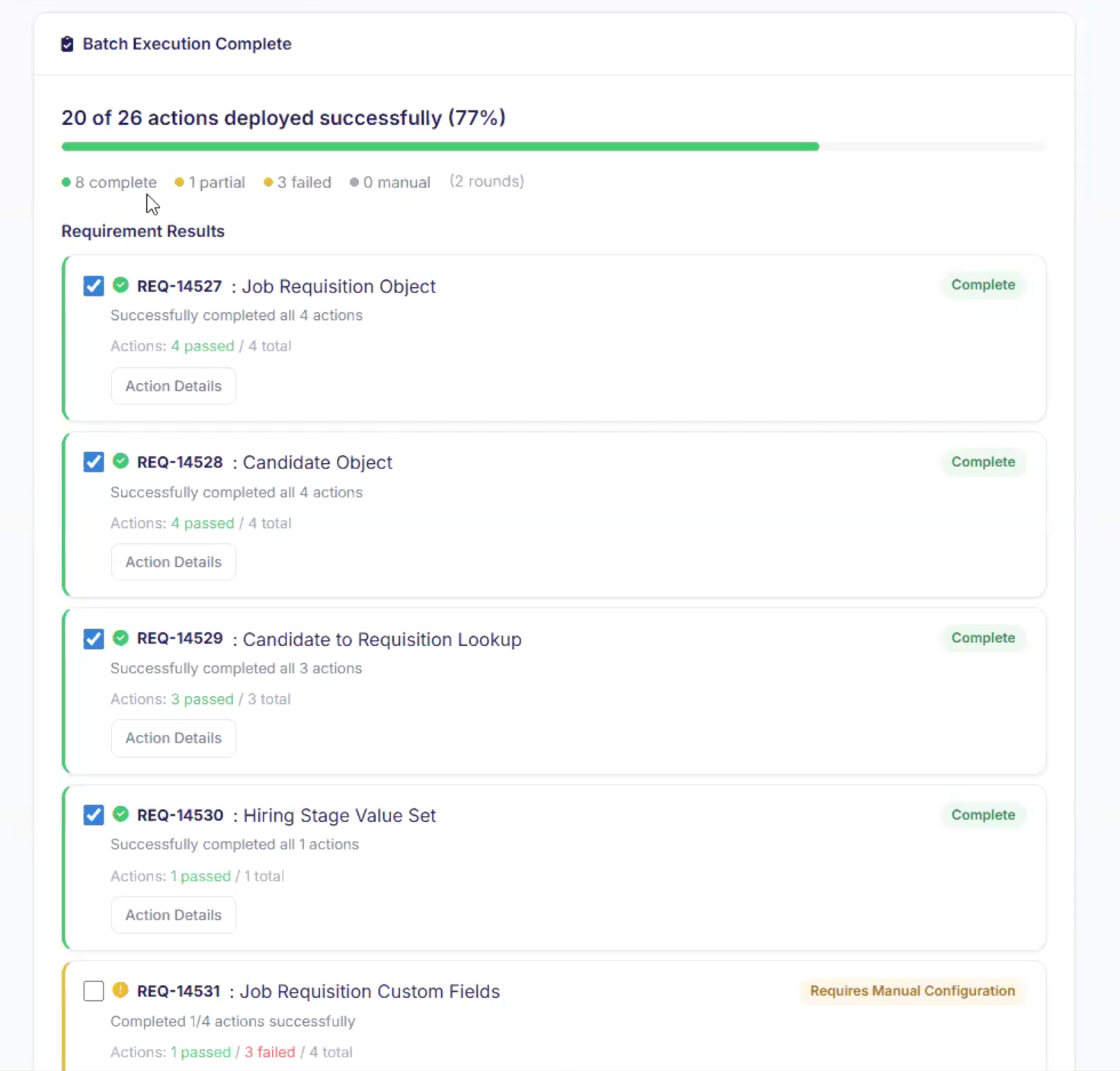
Automatic Documentation: Once components are built, the engine creates configuration items for the user, removing the need to add them manually to requirements.
Deployment Readiness: Because configuration items are automatically listed in the requirement record, users can quickly generate a manifest for deployment tools such as ClickDeploy.
Comprehensive Component Scope
The AI engine currently supports 37 metadata components categorized to cover the essential pillars of the platform:
Data Model: Includes custom and standard objects, fields, record types, picklists, and field dependencies.
User Interface: Automates the creation of page layouts, Lightning record pages, apps, tabs, list views, and global actions.
Security & Access: Manages permission sets, groups, roles, sharing rules, and named credentials.
Communications & Platform: Sets up email templates, alerts, queues, and public groups.
Intelligent Analysis and Safety Features
To ensure accuracy and environment stability, the engine includes several layers of validation and control:
Dependency Mapping: It analyzes all backend dependencies and organizes the build into multiple rounds to ensure prerequisites (such as objects) are created before dependent items (such as lookups).
Cross-Batch Validation: The engine checks what is already configured in the sandbox to determine dependencies for subsequent batches of requirements.
Confidence Scoring: Each requirement is given a confidence percentage based on the AI's analysis, flagging potential failures or assumptions for human review.
One-Click Revert: The "cleanup test session" feature allows users to undo an entire batch, deleting metadata and associated configuration items if the results are unsatisfactory.
Agile Flexibility: Users can process requirements in manageable batches of 1 to 20 or use a free-text box to type what they want to configure for quick, one-off configuration tasks.